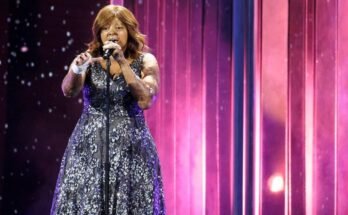

Mandy Harvey’s Viral America’s Got Talent Performance Still Moves Audiences Years Later
There are some performances on America’s Got Talent that are remembered long after the season ends. Mandy Harvey’s 2017 audition is one of them. Her emotional performance of her original song “Try” not only earned her a standing ovation from the judges and audience, but also one of the most memorable Golden Buzzer moments in the show’s history.
When Mandy Harvey walked onto the America’s Got Talent stage during Season 12, she immediately had a story that caught the judges’ attention. But what happened next made it clear that her appearance was not simply about her personal journey. She was there as a singer-songwriter, and she wanted the audience to hear her music.
Harvey had lost her hearing at the age of 18 after a connective tissue disorder caused the nerves in her ears to deteriorate. She had been singing since childhood, but losing her hearing forced her to step away from music for a period of time. Eventually, however, she found a way to return to the passion that had been such an important part of her life.
A Singer Who Refused to Give Up
Before performing, Harvey explained to the judges that she had learned to sing again by relying on techniques including muscle memory, visual tuners and her understanding of pitch. She also explained that she could feel the rhythm and tempo through vibrations.
For the audition, Harvey removed her shoes so she could feel the beat through the floor of the stage. She then picked up her ukulele and began performing her original song, “Try.”
The song itself became an important part of the moment.
Harvey explained that after losing her hearing, she had initially given up on music. But instead of allowing that setback to define the rest of her life, she decided to try again. That idea became the heart of her song.
The message was simple but powerful: sometimes the hardest obstacle standing between a person and their dreams can be the belief that they should stop trying.
As Harvey began singing, the atmosphere in the theater changed. The judges listened closely, and the audience quickly became absorbed in the performance. Her voice was clear and expressive, while her ukulele provided a gentle musical foundation.
What made the audition especially remarkable was the combination of technical ability, songwriting and emotional honesty. Harvey was not simply telling the judges about overcoming an obstacle. She was demonstrating it through her music.
The Moment Simon Cowell Hit the Golden Buzzer
When the performance ended, the response was immediate.
The audience erupted into applause, and the judges gave Harvey a standing ovation. Simon Cowell, Heidi Klum, Howie Mandel and Mel B were visibly impressed by what they had just witnessed.
Then came the moment that turned the audition into television history.
Simon Cowell pressed the Golden Buzzer.
Golden Buzzer moments are designed to recognize performances that stand out from the rest of the competition, sending an act directly into the live rounds. In Harvey’s case, the moment was especially emotional because it represented recognition not only of her journey but also of her ability as a musician.
Cowell praised Harvey’s voice, tone and songwriting, describing the performance as one of the most amazing things he had seen and heard. His reaction reflected what many viewers were feeling at the time: surprise, admiration and genuine appreciation for the performance.
The Golden Buzzer sent Harvey through to the live shows, transforming what had started as an audition into a much larger opportunity.
Why the Performance Connected With So Many People
Mandy Harvey’s audition quickly became one of the most widely discussed performances from America’s Got Talent that season. News organizations and entertainment publications covered the emotional audition, while viewers shared the performance across social media.
But the lasting appeal of the moment was not simply that Harvey was deaf.
The performance connected with audiences because she demonstrated genuine musical ability while telling a story about persistence and finding a way forward after an enormous setback.
In interviews after the audition, Harvey emphasized that she wanted people to see her as a musician rather than simply as a person who happened to be deaf. She explained that she did not want pity; she wanted her work to be recognized for what it was.
That distinction is important.
Her performance was powerful because the audience could appreciate the music itself. The story behind it added another layer, but her songwriting, vocals and stage presence were what ultimately made the audition stand out.
Finding Music in a Different Way
Harvey’s approach to performing also challenged assumptions about what a singer needs in order to make music.
Because she cannot rely on hearing in the conventional way, she developed other methods for maintaining pitch and rhythm. Visual tuners, muscle memory and physical sensations became important parts of her musical process.
She has also discussed how she approaches songwriting. In an interview following her America’s Got Talent appearance, Harvey explained that she focused on the words and story of “Try” before working on the musical arrangement. She could then use visual tools and feedback to help develop the melody and structure.
That process shows that musicians do not all have to experience music in exactly the same way.
Harvey found her own path.
More Than Just a Golden Buzzer
The Golden Buzzer was only the beginning of Harvey’s America’s Got Talent journey.
After her audition, she continued performing during the competition and eventually appeared in the live shows. She also performed another original song, “Mara’s Song,” during the season. The official America’s Got Talent YouTube channel published that performance as well.
Her story also continued beyond the television competition. Harvey became known for using her music and public platform to encourage people to face their own challenges rather than immediately assuming that something is impossible.
That is part of what makes her 2017 audition continue to resonate.
A Golden Buzzer can create a dramatic television moment, but the reason people remember a performance years later is usually something deeper. In Harvey’s case, it was the combination of a beautiful original song, an extraordinary personal journey and the determination to return to something she loved.
A Performance That Still Inspires
Years after Mandy Harvey first stepped onto the America’s Got Talent stage, her audition remains a powerful example of how music can communicate beyond circumstances.
She walked onto the stage carrying a ukulele. She stood barefoot so she could feel the rhythm. She sang a song she had written about choosing to keep going. And by the end of the performance, the judges and audience were on their feet.
Simon Cowell’s Golden Buzzer turned the moment into one of the show’s most recognizable auditions, but the real story was Harvey herself.
She had lost her hearing, stepped away from music, and then found a way back.
Her message was never simply that obstacles disappear. Instead, it was that an obstacle does not necessarily have to be the end of the story.
That is why Mandy Harvey’s audition continues to be shared, discussed and remembered by America’s Got Talent fans. The performance offers something that goes beyond a television competition: a reminder that talent can take unexpected forms, and that sometimes the most meaningful victories begin with one decision — to try.
For viewers discovering the performance today, the Golden Buzzer may be the moment that catches their attention. But after the applause fades, it is the song and the story behind it that remain.
Mandy Harvey stepped onto the America’s Got Talent stage in 2017 hoping to prove something to herself and to the judges.
Instead, she gave millions of viewers a reason to believe that giving up does not always have to be the final chapter.